27. Ana Kerin
“Surround yourself with things you’re not going to be embarrassed by or hide away, but things that your children want to fight over!”
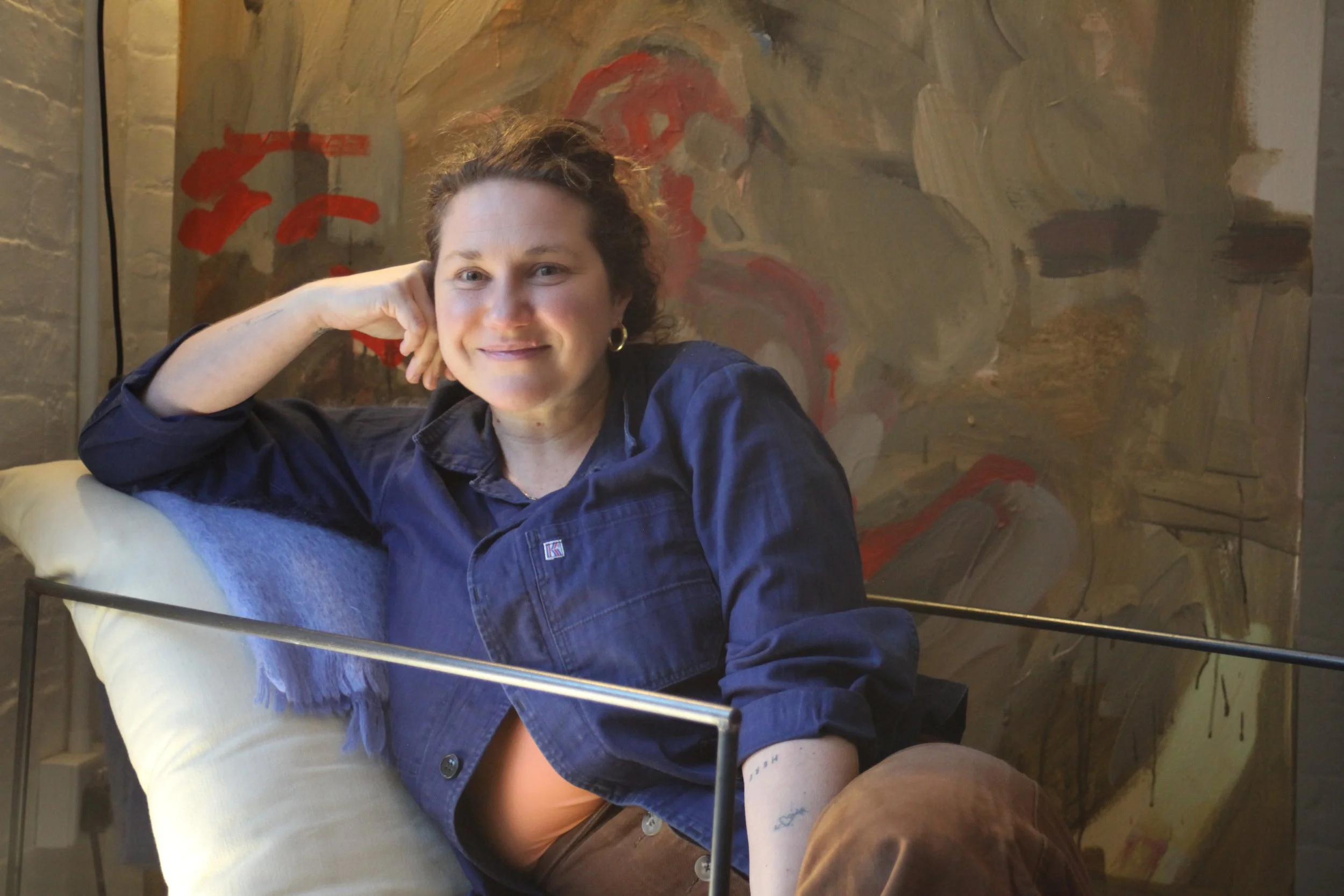
I have admired the artist Ana Kerin from afar for the last few years. Her painterly ceramics, while functional, are artworks in their own right. I couldn’t resist buying one of her beautiful plates last year and used it as an opportunity to ask her if she was up for being interviewed.
While my introduction to her work was through her ceramics, Ana doesn’t consider herself a “ceramicist” at all: “obviously I make ceramics, but my background is fine art. I studied sculpture, painting and printmaking and I was trained at the very old-fashioned Academy for Fine Art and Design in Slovenia. It was academic and old-school and you study for five years straight. I know nothing about pottery, but I understand clay and materials because I studied them in depth as a sculptor. But if you speak to potters, they have very different rules, they like things done in a very particular way”.
Ana’s master’s degree does sound like it was pretty intense: from 7am to 9am she studied anatomy. After that, art history, theory, philosophy, then life drawing every day between 6pm to 8pm. The academy was locked on the weekend, so there was no opportunity to do any sneaky catching up between Friday evening and Monday morning.
Born and raised in former Yugoslavia, Ana didn’t know her father growing up. About her mother she tells me “she wanted to be an artist but was unable to, because she was expected to study something [vocational] in order to get a job. She became an art teacher, which she didn't enjoy, but later went into PR and project management for NGOs and humanitarian organisations. She then co-founded a charity and has been regional head of the Red Cross for many years. She has always been a visionary, bringing new projects to life and changing legislation. She is my moral compass; I got the need and want to do good and right from her. Not just for myself but for all of us”.
Around 15 years ago Ana moved to London. “I started making functional ceramics as a side project, as an experiment” Ana explains. “The problem was that in London, you’re always in shared studio spaces with capacity issues and lack of space. To begin with, it was hard to access the materials I was used to, because of the cost. I had been used to making large scale sculptures, but when I came here, I had to redirect my attention into painting. But because I still had an urge to work in 3D, I started making smaller ceramic pieces. I then realised that if I took the leap of committing to a studio, perhaps if I made enough ceramics, I might be able to sell my work”.
Meanwhile, Ana was making cups for her and her studio mates to drink coffee from. She then naturally moved on to bowls and plates so that they were able to eat lunches together. One day a client came in to look at her work. They had a coffee, a bite to eat and then asked if they could buy the cup or the plate, too. Then it happened again, and again. After that, someone asked for a whole set. Then a commission came in for a set for someone's 50th birthday. Suddenly Ana was taking commissions for pieces that she hadn’t planned to sell at all. In the beginning she felt a little uncomfortable about the direction her work was taking, because of her strict fine art education - those shackles were hard to shake off:
“I came from a very judgmental space - fine art school was a superior place. There was friction between the design side of the academy and the fine art side. All the professors in fine art thought they were above design. You couldn't hang out with the design students; they didn't approve of us mixing with students from other departments. The problem was mainly generational - some of the tutors were in their 80s! They should have retired! What are they even doing there? And there wasn’t a single woman allowed to take over the senior positions, because it was so sexist. I was in the first academic year where there were two women students!”
At one point, Ana was making sculptures in clay, experimenting with glazes and clay combinations and making more functional pieces “and the kiln room technician got fired as a punishment, because he allowed us to fire functional ceramics! If, back then, someone had asked me to make a set of cups or a bowl as a statement piece for the table, I knew I would absolutely not be allowed. If someone found out, I would ruin my career”.
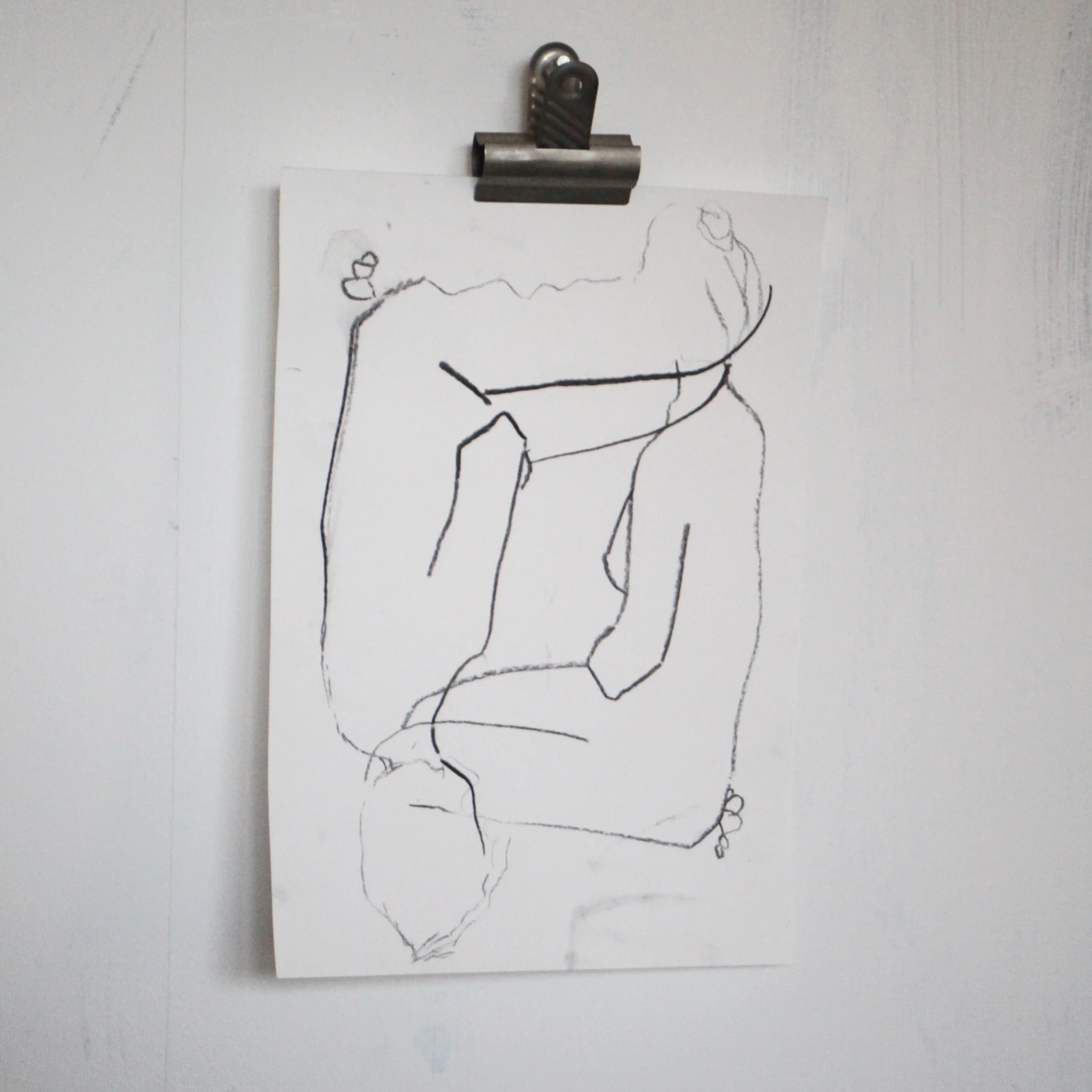
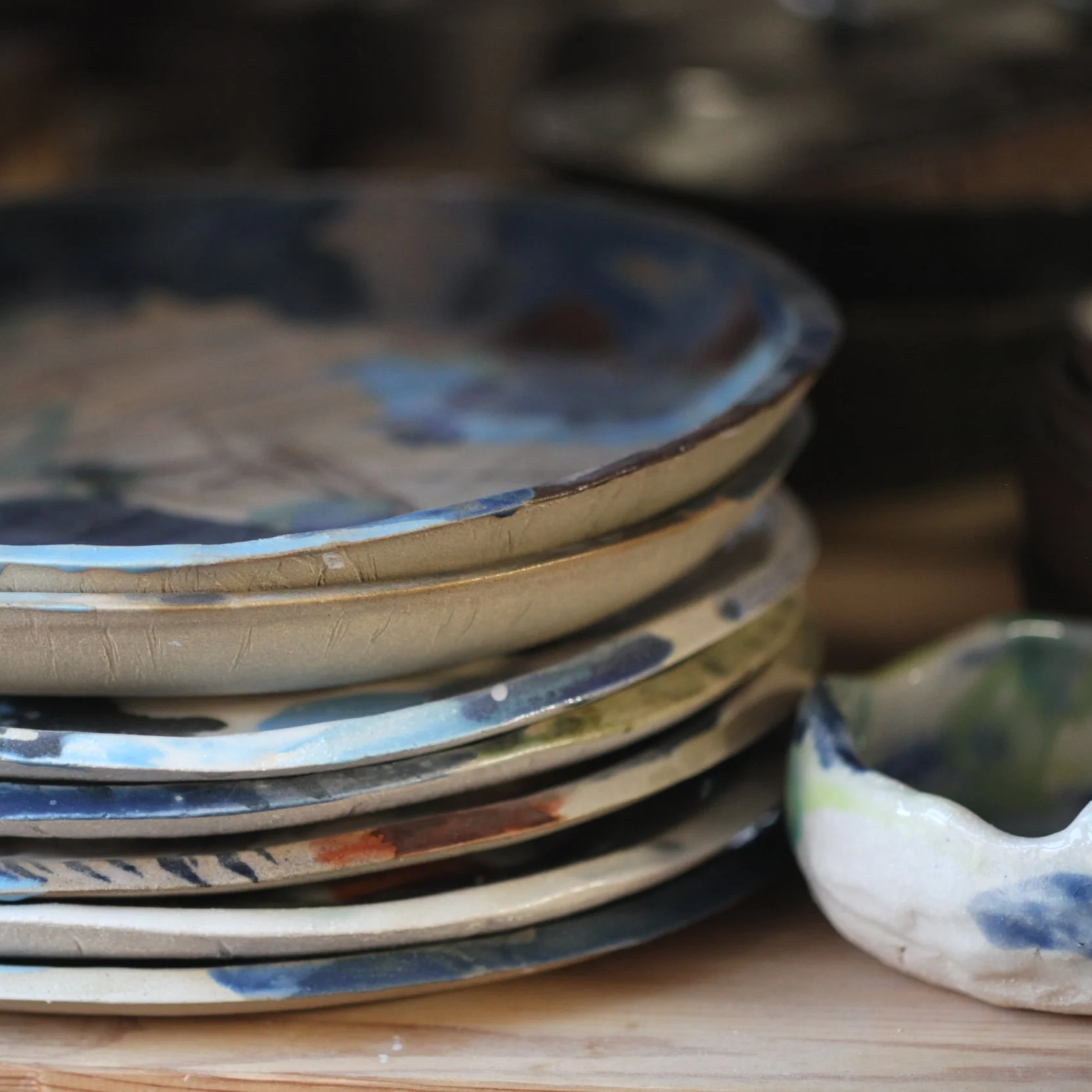
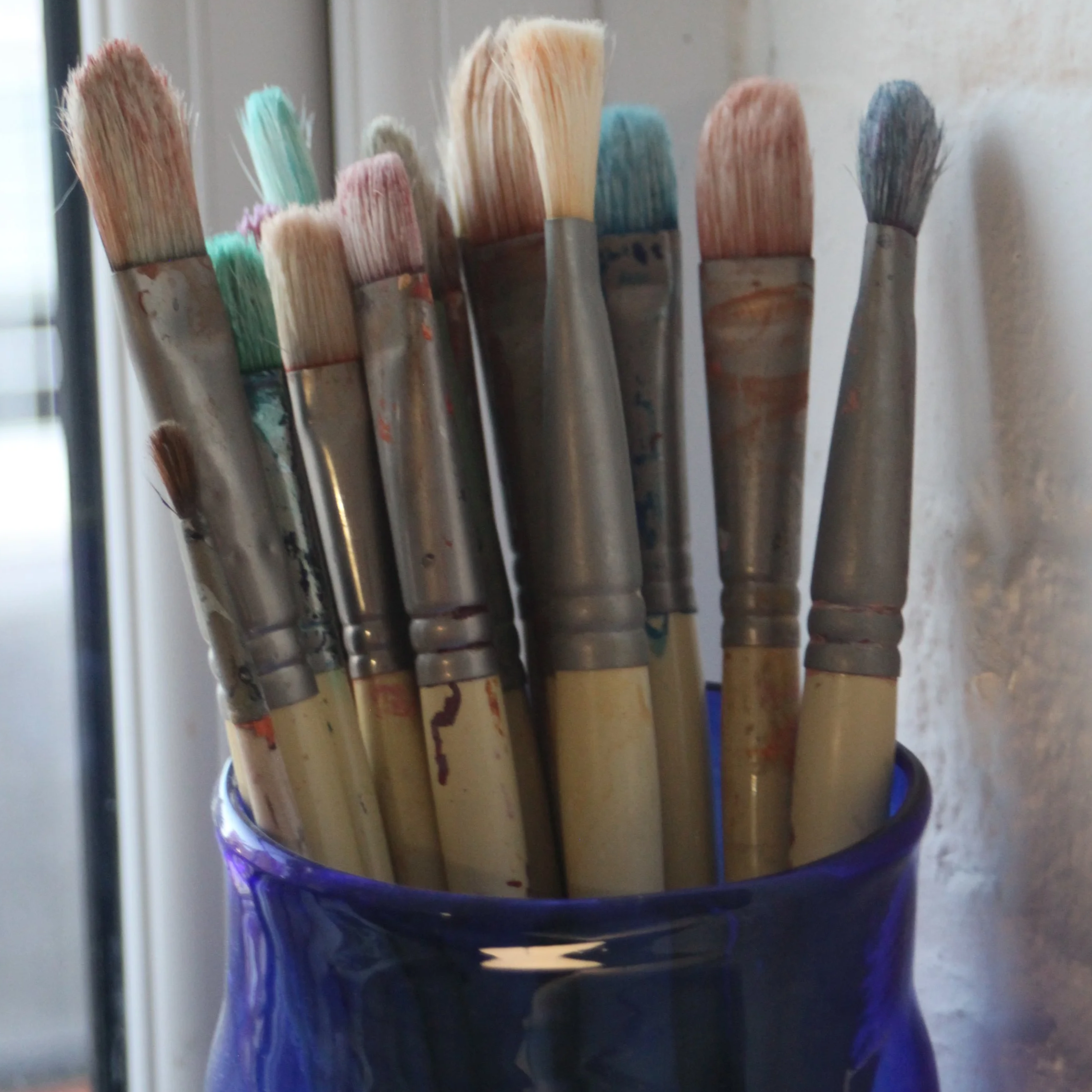
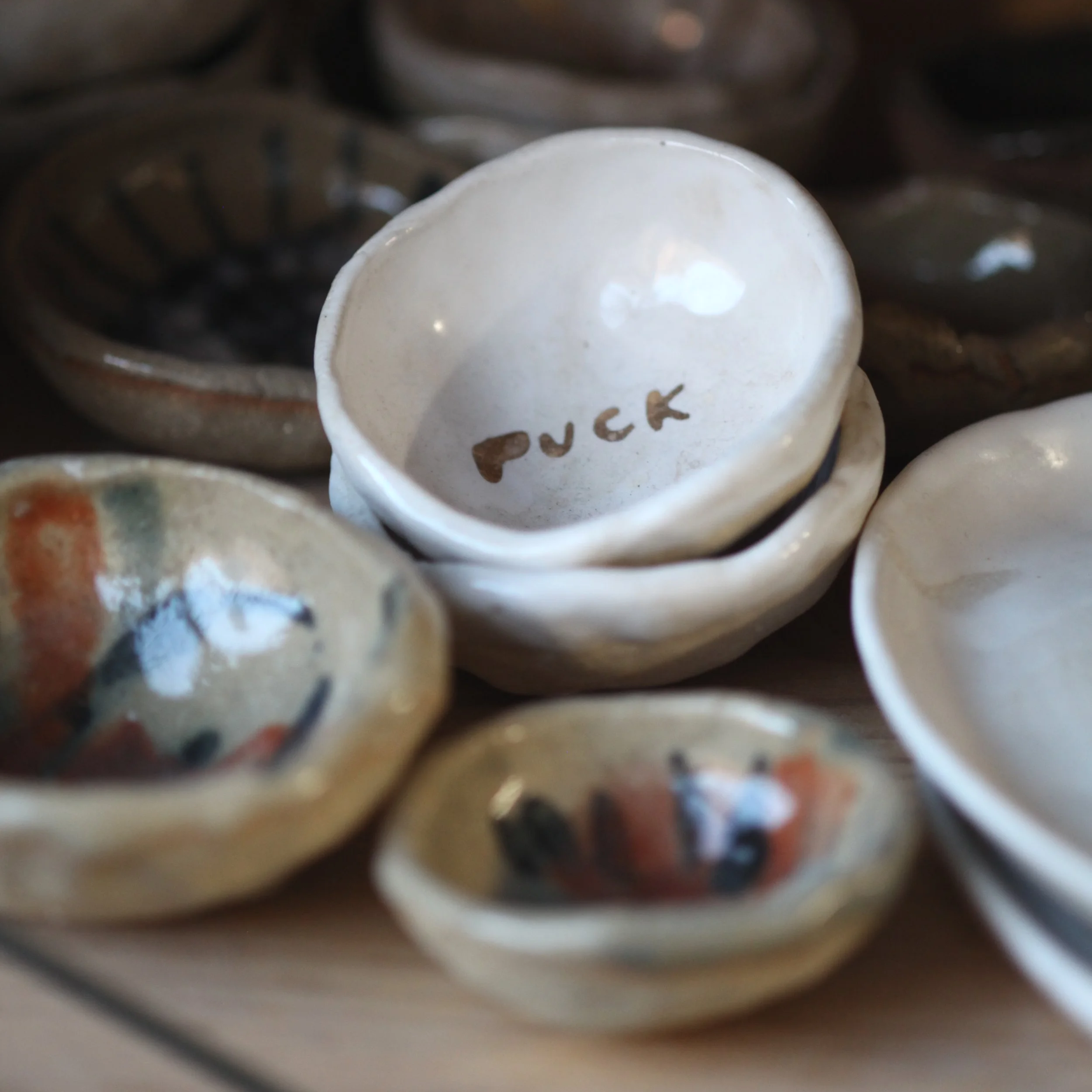
It’s only relatively recently that Ana has been break free of those limitations. To give space to her creativity, she created a separate brand to protect her name as an artist “which felt really weird, and I eventually gave up the whole thing. After 10 years of that friction, I realised I just needed to bring it all back home together as one thing. I no longer see it as Kana/Ana Kerin”. She says she feels more like a multi-media artist and gets frustrated by the fact that people like to pigeon-hole artists and makers.
“The pottery world didn't like me, the fine art world didn't like me either because now I'm “commercial” and selling my soul! Then the design world was like, ‘who the fuck is she?’ I haven't studied here. I have no contacts. I have no name, I have no family history, and I haven't even studied in any of the universities here that would give me that kind of ticket”.
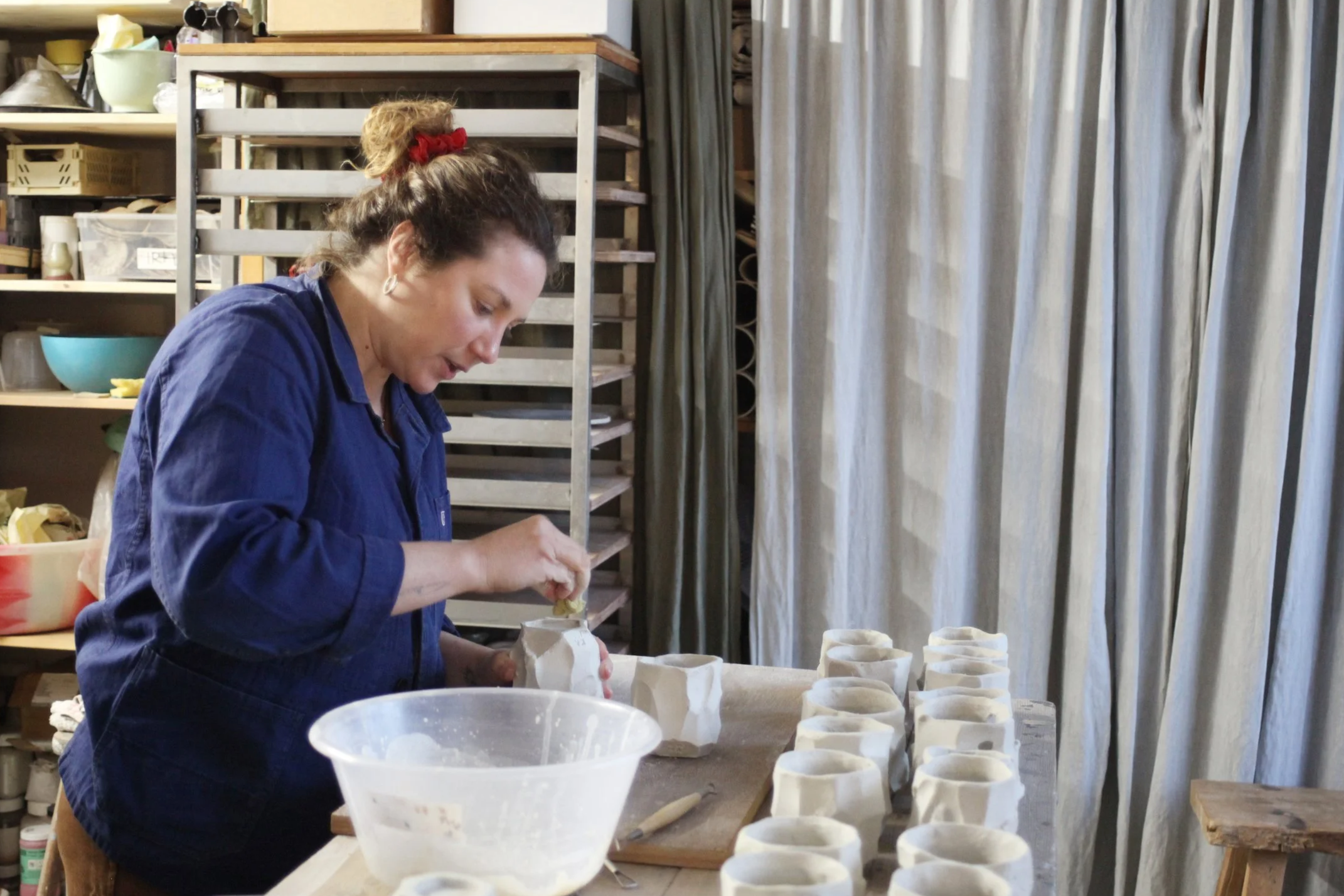
But she carried on regardless and it seems to be working. Her studio is brimming with canvases, sculptures and so many beautiful cups and plates that it’s impossible to resist picking them up and holding them in your hands.
Ana has always felt conflicted about her fine art work, because of its world of privilege: “it’s sort of morally questionable. It it even necessary? Although I obviously strongly believe that it is”.
Perhaps to counterbalance this, she followed in her mother’s footsteps, working extensively in Western Africa with NGOs in humanitarian aid. She felt a strong personal connection with her work there because of her own history:
“I was born in Yugoslavia. The country no longer exists. It was a socialist country that saw capitalism come in and take over. We lived through that transition. These [West African] countries also had a history of socialism, so their relationship with materials was very different to that of the modern world. Things were made to last and to be cherished for generations. They're made to be passed down, and as well as being “pottery” or “textile”, it’s also art. As a craftsperson in these places, you are the same status as an artist. And these skills are passed down to the next generation. It's respected, appreciated and loved”.
After Yugoslavia broke apart “my country’s values shattered overnight – all of the materials were suddenly shit. I had grown up with everything being really good quality and suddenly it just wasn’t. There was a fabric shop, where the colours were very specific. I remember going to that shop and everything was always in the same colour palette. When you see photographs of me from my childhood, my clothes are made from the same fabric as the curtains and the cushions - it was very Wes Anderson! But the quality was exceptional and nothing went to waste”.
This prompted a very long conversation about the importance of heritage and craft and how grateful we are that, for many, there is a return to that (and of course for some, it never went away). Which led us on to what Ana believes was the beginning of that shift, which was the birth of new British cuisine. New and exciting chefs were popping up and opening restaurants up and down the country and in cities across the world. They needed plates and they wanted something different. They were commissioning independent ceramicists to make their crockery, carpenters to construct their joinery and textile artists to make their tablecloths and napkins. In doing so, they celebrated the makers. It brought people’s attention away from IKEA, Habitat and John Lewis.
“I started making functional ceramics to bring that idea forward, my contribution to the revolution against mass consumption. And maybe as an artist, I give those pieces extra value. Because you can buy my sculptures in a gallery for £800, or £5,000 but you can also buy my cup or plate. Surround yourself with things you're not going to be embarrassed by or hide away, but things that your children want to fight over! In my family, we are fighting over the beautiful locally grown hemp sheets that were my grandma’s”.
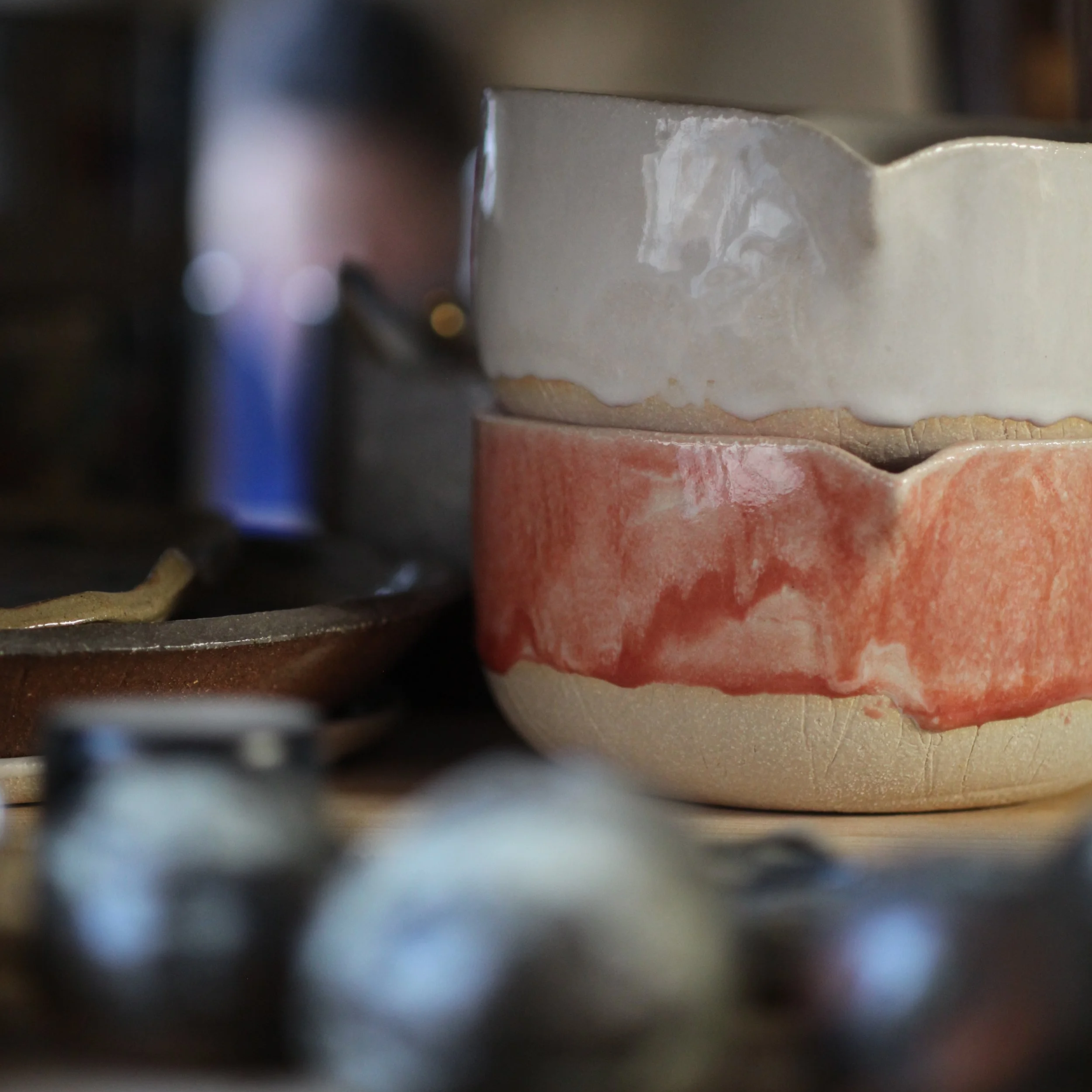
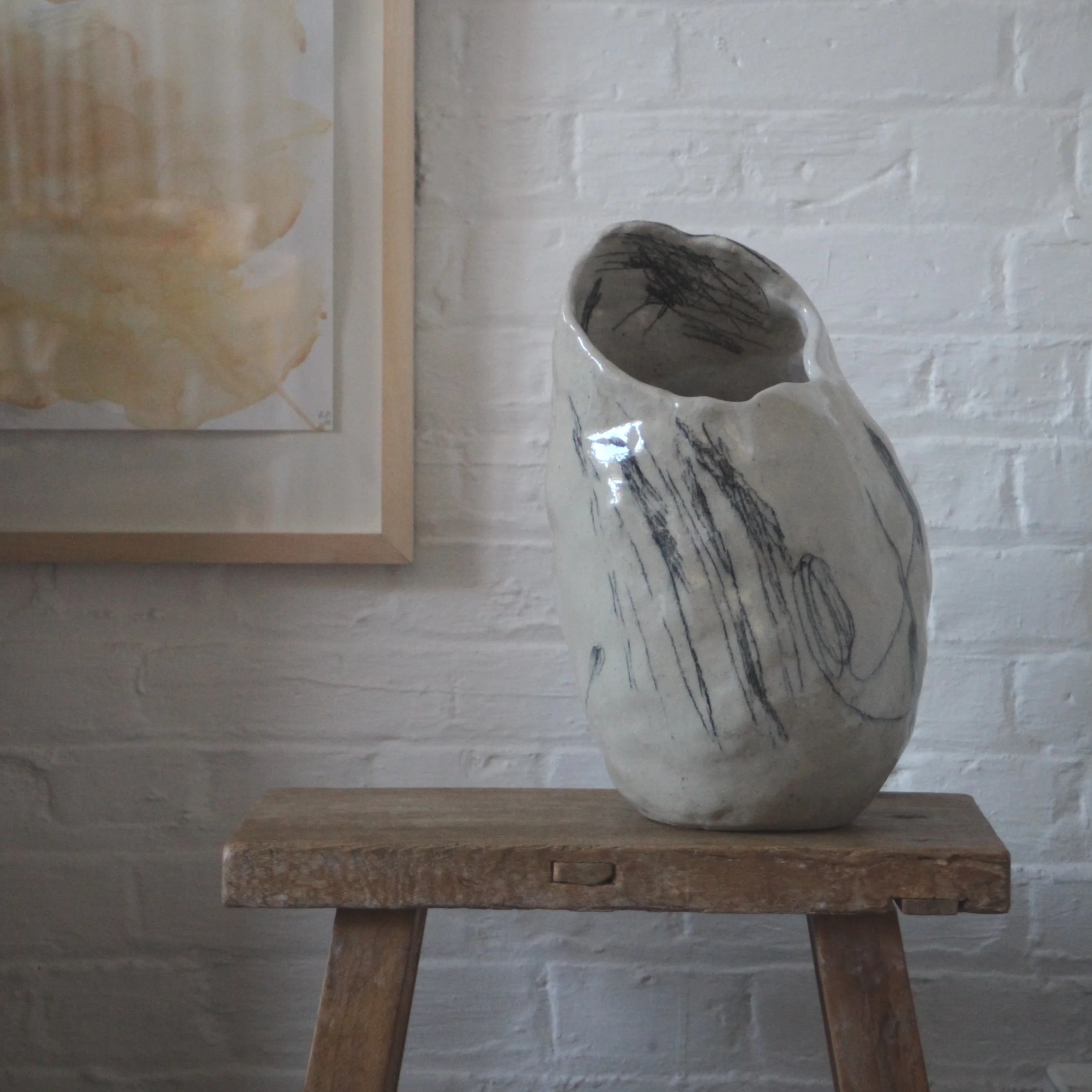
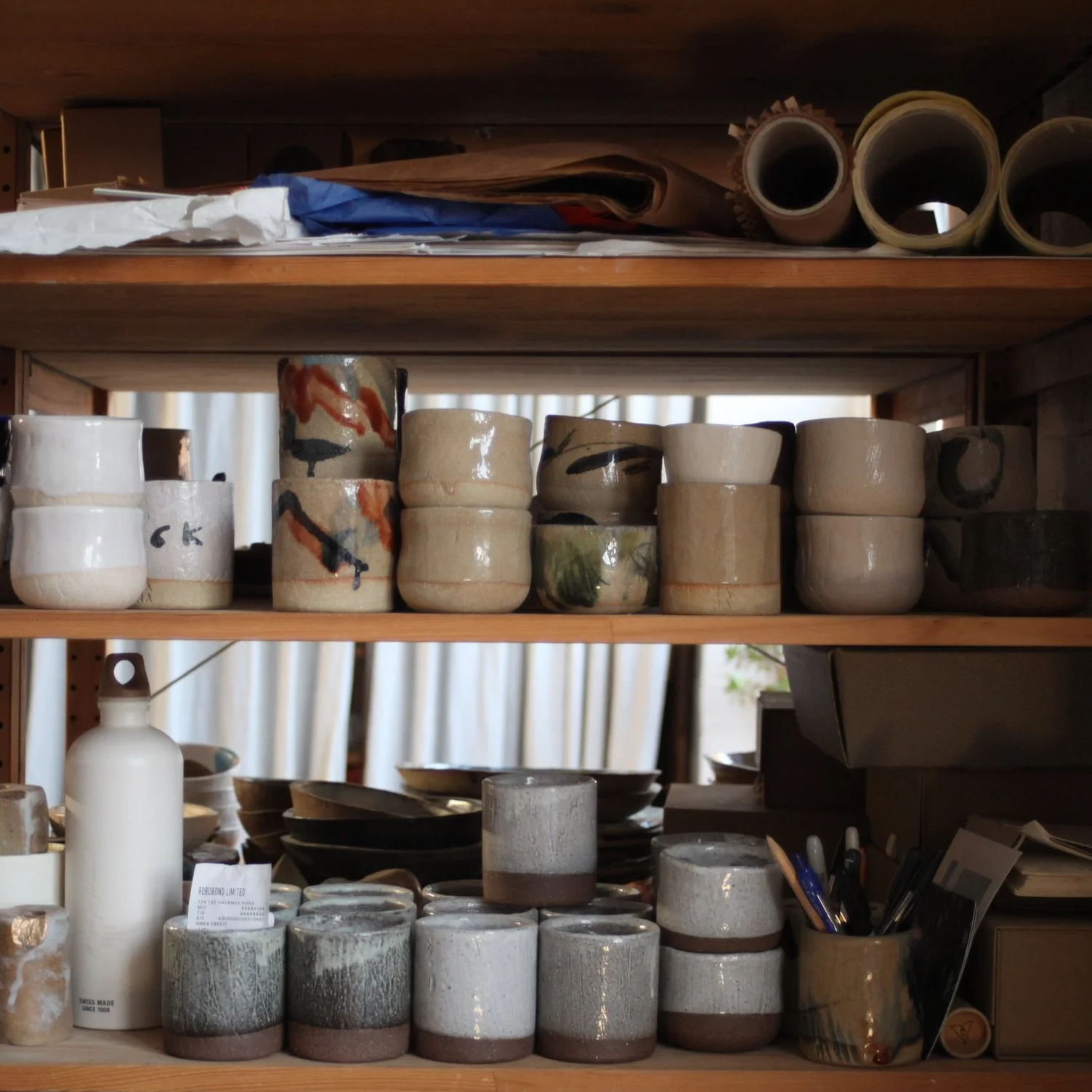
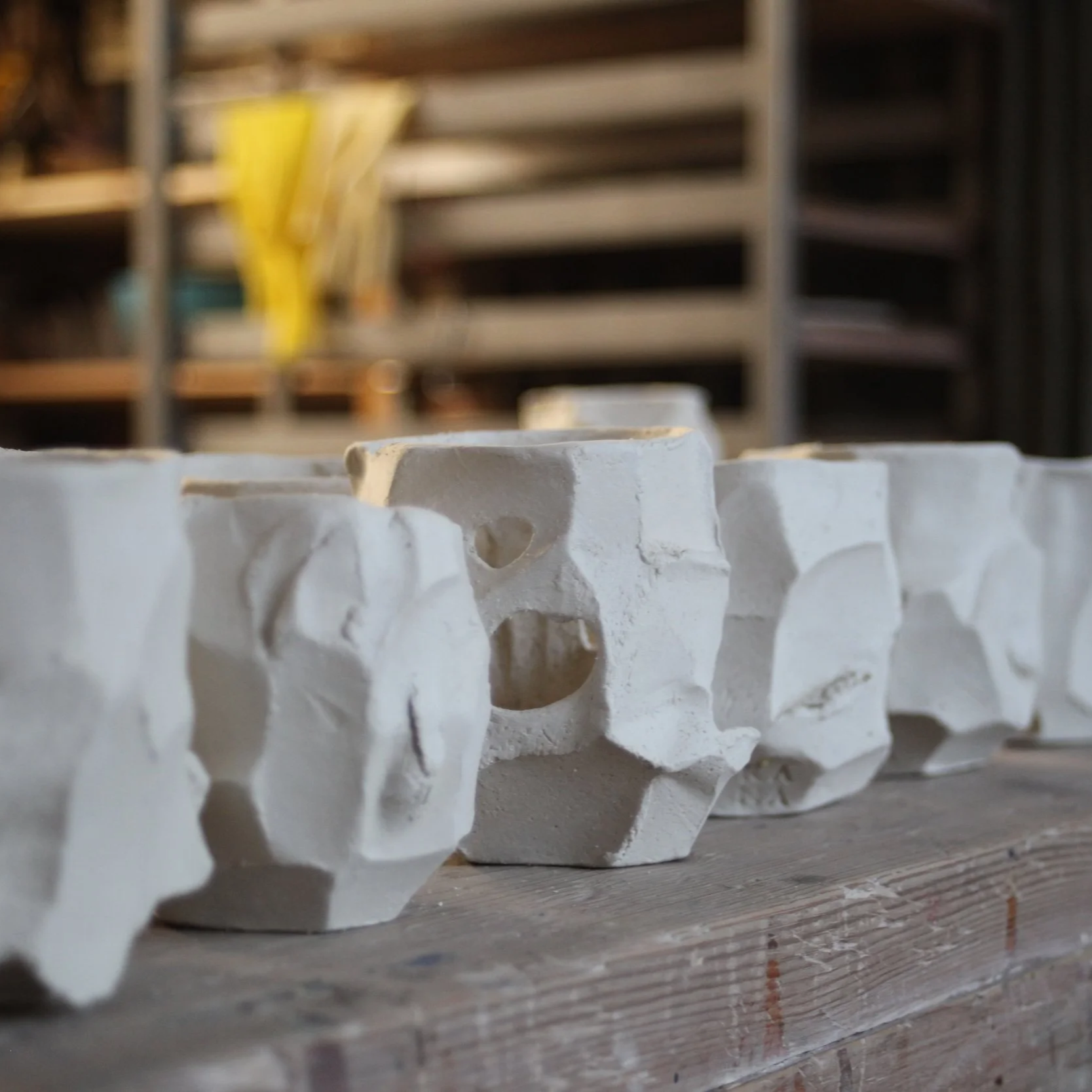
When working on new pieces, Ana’s process depends entirely on the materials and the brief: “am I making for myself or a client? With a client I must work within certain parameters: functionality, dimensions, etc. But there are pieces that just get made spontaneously, too. I work best with just a chunk of clay in my hands. And sometimes pieces lie around and I don't even know their function, whether they’re going become something or not”.
She then goes on to explain the personal conflict and contradictions of her practices:
“I enjoy the extroverted aspect of working as an artist, but I don't like that in my actual practice - I don't want anyone's opinions when I'm painting, for example. My boyfriend thinks I am crazy, how much I hate it when he gives feedback! I’m like, ‘it’s a process! How dare you!’. But he's a filmmaker so for him, it's all about collaboration. But on the other hand, I'm not like that with my ceramics at all. Ceramics for me are a playground, a chance for me to be surrounded by people and respond to their ideas. A total contrast!”
On her rituals, she said she hates most of all the feeling of wasting time, so has an almost monastic approach to studio days, rising so early it could be perceived as punishment. She gets a kick out of knowing she has a huge stretch of uninterrupted time ahead of her and takes snacks to the studio with her, so she doesn’t have to stop working. I obviously ask Ana what her top snack is (this is important stuff): rice crackers with peanut butter and banana: “in the studio it really does the job, because it gives you a big boost. Sometimes I need to be here until 4am!”.
Finally, I ask her which women in art or business she is most inspired by and there’s a wonderful array of people here:
Artist Anousha Payne, photographer and lecturer Eva Sajovic, British Iranian multimedia artist Laila Tara H and Yemeni Egyptian photographer Yumna Al-Arashi. Writing by Naomi Shimada, she says, “tears me open”.
Ana wears and loves pieces by Bug Clothing, who make everything using deadstock fabric, and knitwear by Ilana Blumberg. She wears jewellery by Tatiana Maltby at We Are Arrow and she eats at Lot 103 in Newington Green as well as Tiella Trattoria on Columbia Road.
Find Ana on Instagram here and find and purchase her work here.